


Shellie Dolan
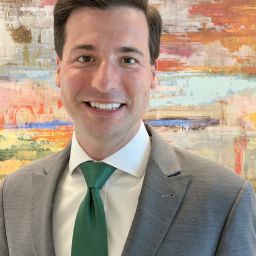
Shellie Dolan serves as Director of Grants in McAllister and Quinn’s Higher Education Practice. She provides guidance, technical advice, and professional grant writing for clients to pursue external funding opportunities, overseeing grant proposal development from initial concept to submission. Her work has included securing federal funding for community colleges serving disadvantaged and underrepresented student populations. Read more about Shellie.
Why Now Is a Prime Opportunity for Community Colleges to Secure Federal Earmark Funding
As Congress advances the FY26 appropriations process, including last week’s passage of the Defense, Transportation–HUD, and Labor HHS bills, community colleges are entering one of the most promising periods in recent years to pursue federal earmarks (known as Congressionally Directed Spending or Community Project Funding requests). With the Trump administration prioritizing workforce development and an election year bringing sharpened focus to local impact, two-year institutions are uniquely positioned to compete for federal earmarks in FY27.
Community Colleges Are Strong Contenders for Earmark Funding
Community colleges and two-year institutions are compelling applicants for earmark funding. Their deep-rooted partnerships with employers, nonprofits, workforce boards, and regional stakeholders create built-in credibility, and their missions align squarely with many congressional priorities.
Workforce development sits at the heart of the federal agenda. Efforts to upskill incumbent workers, prepare students for in-demand occupations, and expand credential pathways consistently earn bipartisan support. Because these priorities mirror the core mission of community colleges, lawmakers see strong value in earmark investments that demonstrate broad community benefit, strong partnerships, and measurable regional impact.
What the Recent FY26 Progress Means for FY27 Earmarks
With Congress advancing several FY26 appropriations bills, many FY26 earmarks have been funded after a year of uncertainty. This momentum matters: congressional offices will soon shift attention to FY27 requests, and early preparation is key.
What Are Earmarks?
Earmarks—known as Congressionally Directed Spending (CDS) in the Senate and Community Project Funding (CPF) in the House—allow members of Congress to direct federal dollars to high impact local projects. These requests are highly competitive, but community colleges have an excellent record of success.
Examples of Recent Community College Awards
$1,000,000
for an open educational resources project to reduce textbook expenses for students at Contra Costa Community College District (CA
$650,000
for virtual navigation, cybersecurity, and future careers hubs at Mott Community College (MI)
Nearly $3 million
for nursing, medical radiography, and EMS equipment at Eastern Maine Community College (ME)
In FY2024 alone, Congress approved $201 million for 158 community college earmarks, with an average award of $1.3 million.
Although earmarks were not funded in FY25 under the full year continuing resolution, many FY26 accounts have now been restored. That means FY27 will be a fresh—and potentially highly competitive—opportunity for many schools.
Understanding Timing and Process for FY27
The FY27 window is expected to open soon with deadlines likely running from January through March, depending on each congressional office. Unlike federal grants, earmarks are less about lengthy narratives and more about crafting a compelling, marketable project, grounded in strong community impact and aligned with the priorities of your representatives.
Still, the process is deeply political, and congressional offices receive far more proposals than they can advance. Successful requests must be:
- Clear
- Concise
- Locally Impactful
- Easy for a member of Congress to champion in DC and at home
This is where experienced guidance can be pivotal.
McAllister & Quinn supports clients through the entire earmark cycle—from shaping the initial concept to crafting persuasive language, coordinating with congressional staff, and ensuring submissions align with eligible accounts and committee expectations.
Insider Tips for Navigating the Earmark Process
1. Know the Process and Timing
Begin developing projects and cultivating relationships with members of Congress and their office staff now. Congressional offices often open portals with little notice, and timelines can be tight.
2. Understand Eligible Accounts
Not every project can be funded under every appropriations bill. Community colleges typically look to accounts in Labor HHS; Commerce, Justice, Science; Agriculture, and others, but the rules vary in the House and Senate.
3. Solicit Early Feedback
Members and their staff can offer invaluable input—if approached early. A brief conversation can clarify whether your project is a good fit for their priorities.
4. Write, Submit, and Wait
After submission, offices will begin the internal process of selecting the projects they will forward to committees. It can take months before any updates emerge. Patience is part of the process.
Ready to Pursue an FY27 Earmark? We Can Help.
McAllister & Quinn has more than two decades of experience navigating the complex, political nature of CDS/CPF funding. We provide strategic support from concept to submission, ensuring your request is competitive, well-positioned, and aligned with congressional priorities.